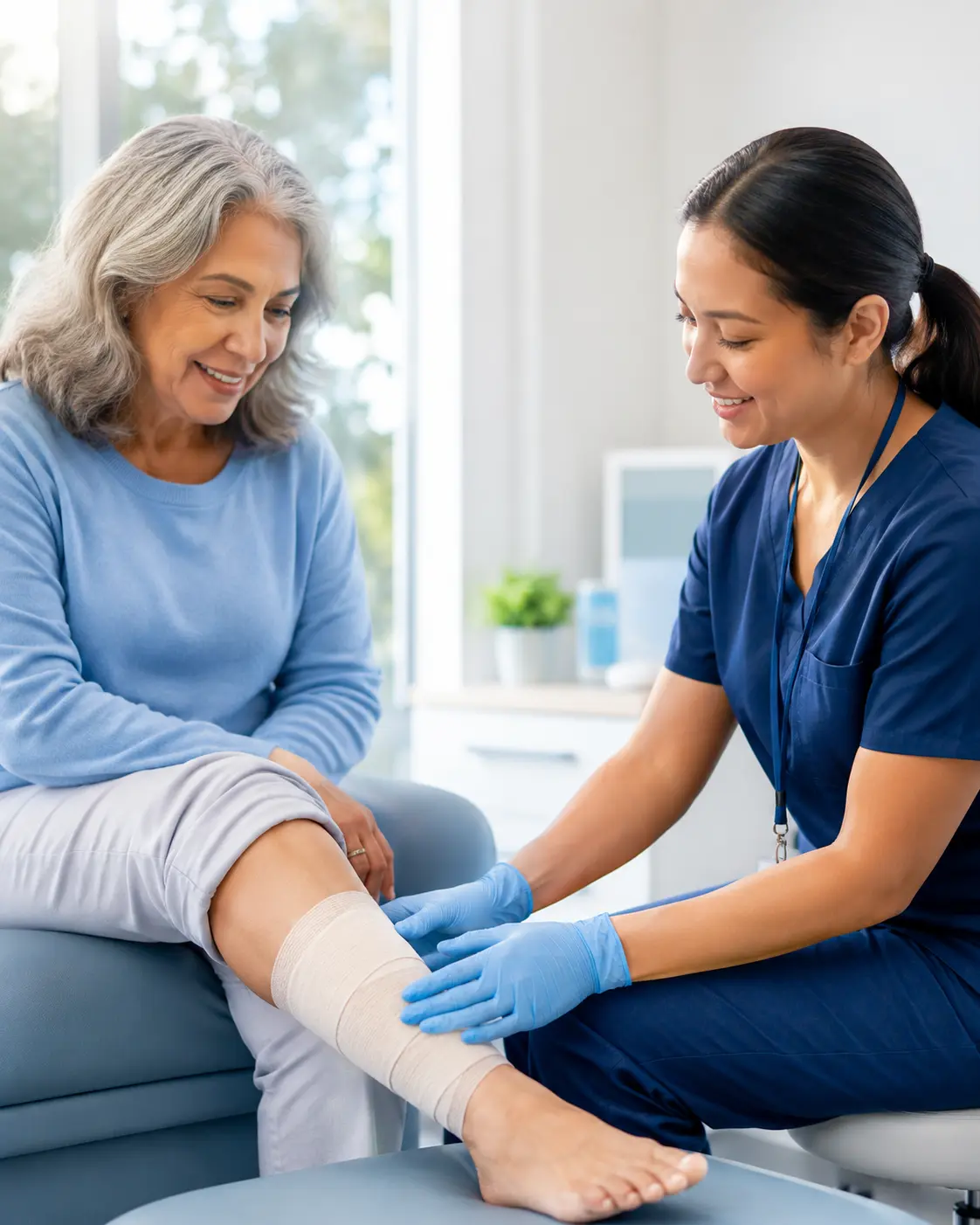
Now Enrolling in Clinical Research

Venous Leg Ulcer Clinical Research Study

Have a slow-healing wound on your lower leg or near the ankle? You may be interested in a clinical research study for people who may have a venous leg ulcer.

Lower leg wound study
Study-related care may be available
Short eligibility form available

Submitting this form does not guarantee study eligibility or enrollment. A study team member may contact you for additional screening.

What Is a Venous Leg Ulcer?

A venous leg ulcer is an open wound or sore that usually develops on the lower leg or around the ankle due to poor blood circulation in the veins.

It can happen when blood does not flow properly back to the heart, causing pressure to build up in the legs. Over time, this pressure may damage the skin and lead to a slow-healing wound.

Common Signs

Symptoms May Include

Swelling in the legs

Skin discoloration

Pain or heaviness

Fluid leakage

An open sore that does not heal easily
Enroll Now
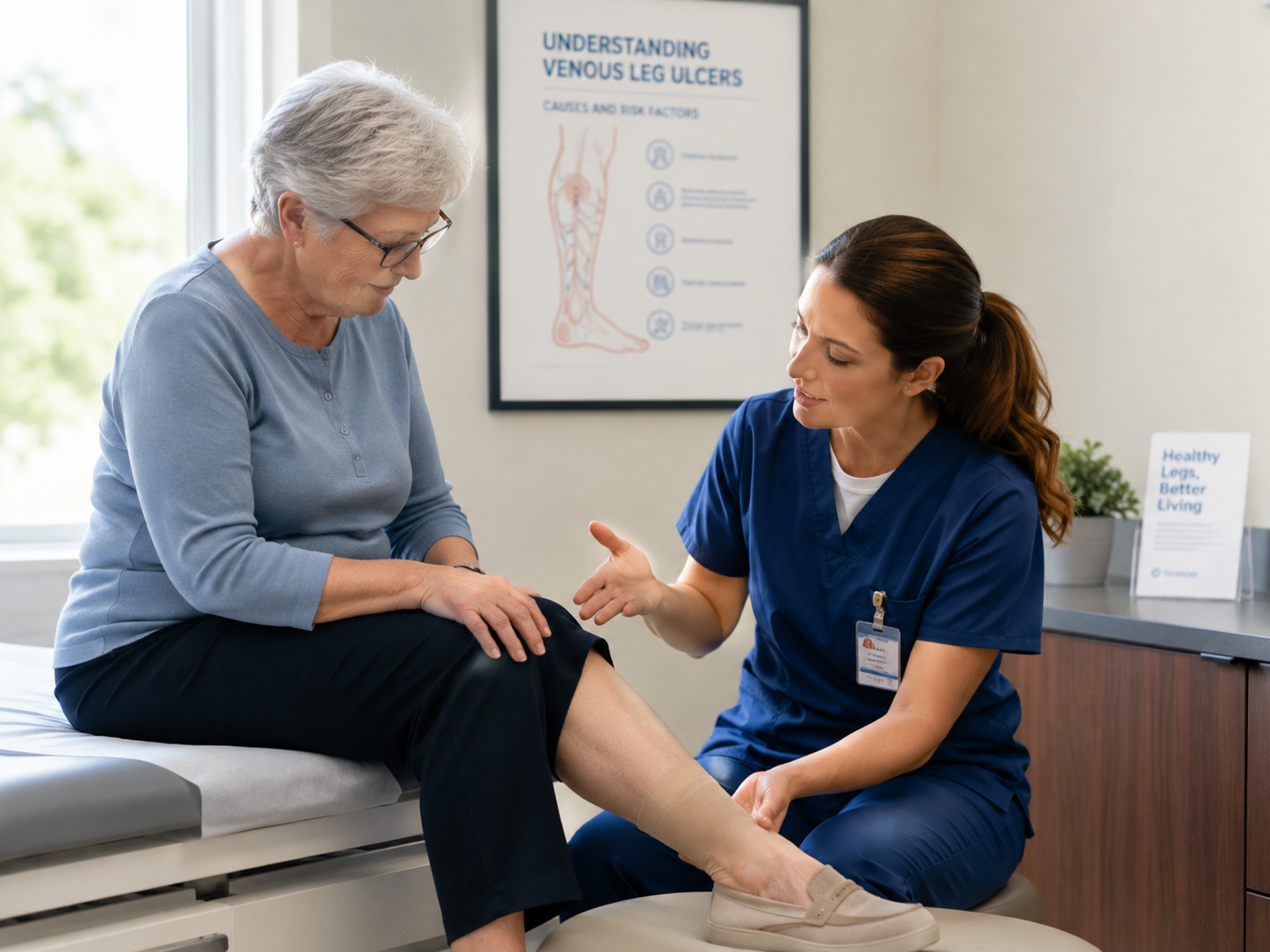
Venous leg ulcer awareness image

Conditions Often Confused With Leg Ulcers

Some leg symptoms may look similar to a venous leg ulcer. If you have a wound or sore that is not healing, completing the eligibility form may help the team review your information.

Varicose Veins

Cellulitis

Diabetic Wounds

Eczema

Simple Muscle Pain

Skin Infections

Different Stages of Venous Leg Ulcers

Venous leg ulcers may develop gradually. Understanding the possible stages can help people recognize when a slow-healing wound may need attention.

01

Early Skin Changes

Mild swelling, itching, skin discoloration, or heaviness in the legs may appear before an ulcer develops.

02

Skin Damage Begins

The skin becomes dry, thin, painful, or inflamed. Small wounds or cracks may start forming.

03

Open Leg Ulcer

An open sore develops, usually near the ankle, which may leak fluid and cause pain or discomfort.

04

Infected or Chronic Ulcer

The wound may enlarge, develop infection, bad odor, increased pain, or delayed healing if untreated.

05

Healing Stage

With proper treatment, the ulcer gradually closes, swelling reduces, and new skin starts forming.

06

Recurrence Prevention

Even after healing, ongoing care and compression therapy help prevent the ulcer from returning.

Healthy Skin vs Infected Wound

Understanding the difference between healthy skin and signs of infection can help people recognize when a wound may need attention.

Normal Signs

Healthy Skin

Smooth and intact

Normal skin color

No pain or swelling

No discharge or odor

Heals normally

Warning Signs

Infected Wound

!

Redness and warmth

!

Swelling or tenderness

!

Pus or fluid discharge

!

Bad smell

!

Delayed healing or worsening wound

Symptoms You Should Not Ignore

A non-healing leg wound may show signs that should not be overlooked. If you notice any of the symptoms below, completing the short eligibility form may help the Research team review your information.

Don’t Ignore a Non-Healing Wound

Enroll Now
Common Warning Signs

Watch for These Symptoms

!

Swelling in legs

!

Skin discoloration

!

Open sores

!

Pain or burning

!

Fluid discharge

!

Bad smell from wound

Clinical Trial Network research support for venous leg ulcer study
Be a Research Hero! Patient-Focused Support

Be a Research Hero!

This study is designed for individuals who may be dealing with a venous leg ulcer or a wound on the lower leg that has not healed as expected.

If the wound has been present for more than one month but less than one year, you may complete the short eligibility form so the study team can review your information for possible pre-screening.

Study Location 7080 Southwest Fwy, Houston, TX 77074

Simple eligibility form and possible pre-screening process

Support from a professional clinical research team

Your Participation Is Always Voluntary

Taking part in a clinical research study is completely voluntary. Before any participation begins, the study team will explain the study details, possible requirements, and next steps.

Submitting an eligibility form does not guarantee eligibility, enrollment, or participation. The study team may contact you for additional pre-screening to determine whether this study may be appropriate based on the study criteria.

Enroll Now

Voluntary Participation

Participation is your choice, and the study team will explain the process before enrollment.

No Guaranteed Enrollment

Submitting a form does not guarantee eligibility, enrollment, or participation in the study.

CTN May Contact You

Our team member may contact you to review your information and discuss possible next steps.

See If You May Qualify for the Venous Leg Ulcer Study

Complete this short eligibility form and a Research team member may contact you to review your information and discuss possible next steps.

Study Location 7080 Southwest Fwy, Houston, TX 77074

Quick Follow-Up

A CTN team member may contact you after reviewing your form.

One Simple Question

Answer one basic question about how long the leg ulcer or wound has been present.

Compensation Upon Qualification

Qualified participants may receive compensation upon qualification: $2,500.

Eligibility Form

Be a Research Hero

Please complete the short form below. Our team may contact you for pre-screening.

Submitting this form does not guarantee study eligibility, enrollment, or participation. A CTN team member may contact you for additional screening.

Scroll to Top